Category Archives

59 Articles

Creating a Timeless Personal Style That Works at Home and Beyond

Personal style is not simply about following the latest fashion trends or decorating a home according to popular design rules. It is about choosing colors, textures, and details that reflect individual preferences while supporting everyday life. A thoughtful approach to style can create a consistent sense of personality in both clothing and living spaces.

Start with Colors You Naturally Enjoy

Color is one of the easiest ways to develop a recognizable personal style. Some people gravitate toward neutral shades such as cream, black, gray, and brown, while others prefer soft pastels or rich jewel tones. Identifying favorite colors can make shopping and decorating decisions more intentional.

In fashion, a consistent color palette makes it easier to combine separate clothing pieces into multiple outfits. The same principle applies to interiors. Repeating a few complementary colors across cushions, curtains, artwork, and decorative accessories can help a room feel coordinated without appearing overly matched.

Invest in Versatile Essentials

A practical wardrobe begins with pieces that suit the wearer’s lifestyle. Well-fitting trousers, comfortable tops, versatile outerwear, and suitable footwear can serve as the foundation for different outfits. Accessories can then introduce personality without requiring an entirely new wardrobe.

For the home, versatile essentials might include a comfortable sofa, quality bedding, functional lighting, and storage that adapts to changing needs. These foundational items deserve more attention than temporary trends because they influence everyday comfort and usability.

Mix Textures to Add Character

Using different textures can make a simple outfit or room feel more interesting. A cotton shirt paired with denim and leather accessories creates contrast through material rather than color alone. Similarly, a living room can combine linen curtains, a woven rug, wooden furniture, and soft cushions for a layered appearance.

The goal is to create balance. Combining too many competing patterns or textures can make a design feel busy, so choosing one or two prominent elements and supporting them with simpler pieces often works well.

Choose Trends Selectively

Trends can provide inspiration, but not every popular style will suit every person or home. Before buying something new, consider whether it complements existing items, fits the budget, and will remain useful after the trend fades.

Secondhand shopping, clothing alterations, furniture refinishing, and rearranging existing accessories are practical ways to refresh personal style without constantly purchasing new products. These choices can also help reduce unnecessary waste.

Conclusion

A timeless personal style develops through thoughtful choices rather than expensive purchases. By identifying favorite colors, prioritizing versatile essentials, experimenting with textures, and selecting trends carefully, anyone can create a cohesive look. Whether getting dressed for the day or refreshing a living room, the most successful style is one that feels authentic and works in everyday life.

The Art of Coordinating Fashion and Home Style

Personal style does not have to stop at the wardrobe. The colors, textures, and patterns people naturally choose to wear can also inspire the way they decorate their homes. Creating a connection between fashion and interiors can produce spaces that feel more personal and intentional.

Begin With a Color Palette

A favorite clothing color can become the starting point for a room’s palette. Someone who frequently wears earthy tones might enjoy interiors featuring beige, olive, brown, cream, or terracotta.

Those who prefer brighter clothing can introduce colorful accents through cushions, artwork, rugs, or decorative objects. The key is not to make everything identical. Repeating a few complementary tones is often enough to create visual harmony.

Use Texture for Personality

Texture plays an important role in both fashion and interior design. Knitwear, linen, leather, velvet, and cotton each create different visual impressions. A room can achieve a similar effect through curtains, rugs, cushions, furniture upholstery, and blankets. Mixing textures can make a space feel more layered without relying on excessive decoration.

Let Accessories Do the Work

Accessories are useful because they can change a look without requiring a complete transformation. In fashion, jewelry, scarves, bags, and shoes can update a simple outfit. At home, artwork, vases, lamps, books, and decorative objects can provide similar finishing touches. These smaller elements are also easier to replace when preferences change.

Create a Style That Feels Personal

Trends can provide inspiration, but personal style should remain the foundation. A beautiful home does not need to look like a showroom. Likewise, a stylish wardrobe does not need to follow every seasonal trend.

When fashion and interiors reflect the same personality, both can feel more authentic. The result is a lifestyle that feels coordinated without becoming overly matched.

From Fashion to Interiors: Why Texture and Natural Tones Keep Crossing Design Boundaries

Fashion and interior design have long shared ideas about colour, material, proportion, and texture. Both disciplines work with surfaces that people see and touch, so similar visual ideas often appear in clothing and rooms at the same time. Recent research into interior materials also shows that texture, lightness, and tactile qualities can influence how people perceive a space.

This crossover is easy to see in today’s interest in layered neutrals and natural-looking finishes. A knitted jacket can gain depth from its weave rather than a bold print. A room can work in much the same way. QuietWalls, an industry specialist in acoustic wall treatments, offers decorative options designed to combine visual texture with acoustic functions such as reducing reflected sound and echo. Products such as their acoustic wall panels provide a practical example, with slatted surfaces and finishes including light oak, walnut, white, and stone or concrete looks.

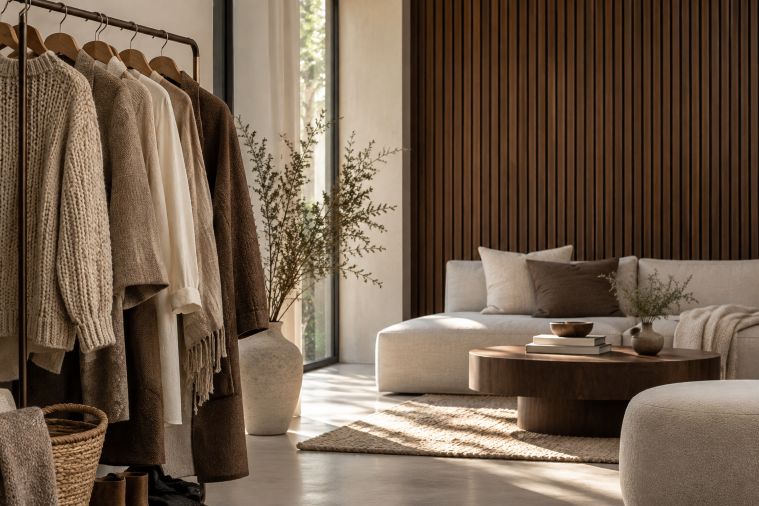
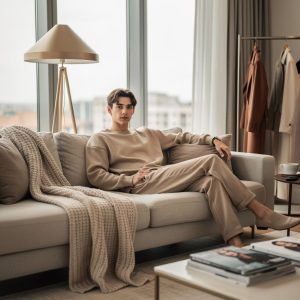
Warm Neutral Wardrobe Lounge

Why Does Texture Work Across Different Design Fields?

Texture gives a surface visual information without requiring strong colour. Fashion designers can layer wool, linen, leather, denim, or other fabrics within a narrow palette and still create contrast. Interior designers use similar principles with timber, stone, upholstery, rugs, plaster, and wall treatments.

The effect is partly about how materials are perceived. A 2026 study published in Buildings examined people’s responses to wood through visual, tactile, auditory, and combined sensory conditions. It found that vision had the strongest influence on perception, while touch also made a meaningful contribution. Lightness was particularly important in how participants judged surface qualities.

This helps explain why a neutral room does not necessarily need to feel plain. Grain, grooves, soft fabrics, matte surfaces, and changes in depth can create variation even when most of the palette stays within beige, brown, cream, grey, or white.

Neutral Does Not Have to Mean Flat

Neutral palettes regularly move between clothing and interiors because they make layering relatively simple. Rather than competing for attention, quieter colours allow differences in texture, shape, and material to become more visible.

Natural materials are especially relevant here. A recent review in Buildings identifies wood and stone as important materials within biophilic design research because their texture, colour, and form can provide indirect connections with nature. The review also found that wood was the most frequently studied natural material and has been associated with comfort, perceived naturalness, and satisfaction.

That does not mean every interior needs real timber or stone. Natural-looking finishes can serve a different purpose. They can introduce visual warmth, grain, or roughness while meeting practical requirements involving cost, installation, maintenance, or acoustic performance.

What Changes When Walls Become Part of the Layering?

Fashion layering usually starts with a base and builds outward. Interiors can follow a comparable logic, with walls providing the background while furniture, lighting, textiles, art, and smaller objects add further layers. This shared design language between fashion and interiors can help explain why similar ideas around texture, proportion, restrained colour, and material often appear in both fields.

A slatted wall changes that relationship because the background itself gains rhythm and depth. Vertical lines create subtle shadow, while the finish determines how strongly the surface contrasts with surrounding elements. Light oak can sit quietly beside pale fabrics. Walnut creates a darker visual anchor. White keeps the relief of the slats while reducing colour contrast. Concrete or stone effects can bring a cooler, more industrial character.

The comparison with clothing should not be taken too literally, but it is useful as a design principle. A textured coat can make a simple outfit more interesting without introducing several colours. Similarly, a dimensional wall treatment can add detail to a restrained room without relying on patterned wallpaper or bright paint.

Function Makes the Interior Comparison More Complicated

Here the connection between fashion and interiors begins to separate. A garment can be replaced when tastes change. Wall finishes generally involve more money, labour, and disruption, so practical performance carries greater weight.

Acoustic treatments illustrate this difference. Decorative slatted panels are intended to influence sound as well as appearance. QuietWalls, for example, describes its walnut panels as wall or ceiling treatments that can help soften echo and improve room acoustics. The company also distinguishes acoustic treatment from full soundproofing, an important difference when considering what these products can realistically achieve.

Research also suggests that material experience is more complicated than simply adding more wood. A study published by Emerald Publishing examined simulated office interiors with different amounts and placements of wood. Participants responded most positively to an image containing a moderate amount of timber, suggesting that placement and balance can matter alongside the material itself.

Where Can Trend-Led Design Fall Short?

The risk comes when a fashionable material is chosen without considering the room around it. A finish that looks warm in a bright showroom may appear much darker in a north-facing room. Strong vertical slats can make an architectural statement on a large wall but may feel busy when several other surfaces already contain prominent patterns.

Scale matters too. Ceiling height, wall width, windows, doors, flooring, and furniture all affect how a treatment is perceived. Lighting can change the apparent colour of timber and increase or soften shadows between slats. These factors are harder to change than cushions, jackets, or seasonal accessories.

There is also reason to avoid sweeping claims about natural materials. A randomized controlled trial published in the Journal of Environmental Psychology found positive effects on emotional well-being in a wooden office, but some physiological findings did not follow the researchers’ expectations. The authors presented the work as evidence that can inform larger future studies rather than a final answer about wood and well-being.

Design Ideas Travel, but Rooms Still Need Their Own Logic

Fashion and interiors will probably continue borrowing from each other because both respond to changing ideas about colour, comfort, texture, and identity. The current interest in layered neutrals and natural-looking surfaces makes that relationship particularly visible.

Still, a home is not a seasonal outfit. Texture works best when it supports the architecture and the way a room is used. Slatted walls, timber tones, stone effects, textiles, and other tactile elements can bring depth to restrained schemes, but their value depends on proportion, light, function, and durability.

The strongest lesson from the fashion-interior crossover may therefore be less about following a particular look and more about learning how to layer. Colour can stay quiet while surfaces do more of the visual work. Trends can provide inspiration, but the room itself should have the final say.

A Fashion & Home Design that Brings Sustainable Style

Aside from clothing, home designing is another aspect of personal style. Home decorating or designing and sustainable fashion are ways to a responsible lifestyle. Both places provide space for individual expression, as well as for more mindful decisions when it comes to materials, consumption and longevity.

Sustainable Fashion with Style

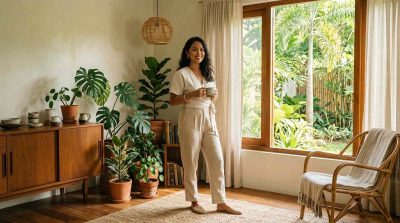
A stylish woman in a thoughtfully coordinated sustainable outfit standing in a beautifully designed eco-conscious home with vintage furniture.Cleaning clothes based on their instructions, mending small tears and holes, and putting them in the right place will help them last longer in service. If an item is no longer required, one could give it to someone else or sell/exchange it for someone else.

Ideas in Designing a Sustainable Interior: Decorate With Purpose

It can be for interiors at home as well. With the new trend of decorating constantly changing, homeowners can select items that will remain forever. Character can be achieved with vintage furniture, handmade items or meaningful personal items without the need for constant consumption.

Reuse cuts down on waste and helps to be creative.

The use of quality materials and flexible designs will minimize replacement needs. This strategy can also lead people to create a unique fashion rather than following every passing trend.

How To Design A Fashion Event Backdrop That Complement the Interior

Fashion events depend heavily on visual presentation, and the venue itself often becomes part of the brand experience. A carefully designed showroom, gallery, hotel, or loft may already feature distinctive flooring, lighting, furniture, and architectural details. Adding a branded photo backdrop without considering those elements can create visual competition rather than a cohesive setting.

The solution begins with treating the backdrop as part of the interior instead of as a separate advertising surface. When reviewing production requirements such as Step and Repeat NYC, event teams should consider the available wall dimensions, ceiling height, camera position, guest traffic, and viewing distance before finalizing the artwork. These practical details help determine whether the display feels appropriately scaled once it enters the actual venue.

1. Start With the Interior, Not the Artwork

Before designing the graphic, photograph and measure the intended installation area. Look at wall colors, flooring, columns, molding, exposed brick, curtains, mirrors, and permanent fixtures. The backdrop will appear within this larger composition in event photographs, so surrounding elements matter.

Design teams can also identify which architectural features deserve to remain visible. The Illuminating Engineering Society has documented projects where lighting, finishes, and architectural elements are carefully coordinated rather than treated as separate layers. This approach is useful for fashion venues because the branded installation can support an existing focal point instead of hiding it.

2. Build a Color Palette Around the Space

Backdrop colors should relate to the interior without disappearing into it. A venue dominated by warm timber, cream upholstery, and brass details may work well with restrained neutral graphics, while a minimalist white gallery can accommodate stronger contrast.

Lighting changes the way these colors appear. The U.S. Department of Energy explains that color rendition describes how a light source affects the appearance of objects and finishes. Its guidance notes that CRI is commonly used to assess this quality, with higher values generally producing more faithful color appearance.

For fashion events, that matters because clothing, skin tones, décor, and printed graphics may all appear in the same photograph. Test printed samples under the venue’s actual lighting whenever possible rather than relying entirely on colors viewed on a computer monitor.

3. Simplify the Logo Grid

A repeating logo pattern needs enough visibility to remain recognizable behind one or several guests. However, filling every available area with large marks can make photographs visually crowded.

Start by considering typical camera framing. Determine where guests’ heads and shoulders will fall, then position repeated marks so recognizable branding remains visible around them. Smaller logos may permit a more refined pattern, while larger marks usually require additional spacing.

Fashion settings often contain strong visual information already, including patterned flooring, sculptural furniture, clothing displays, floral arrangements, or dramatic architectural surfaces. A restrained grid can provide a cleaner background against these details.

4. Select Materials With Photography in Mind

Material selection influences how the backdrop interacts with surrounding finishes and light. Smooth, glossy surfaces can produce noticeable reflections, while matte surfaces tend to provide a more subdued appearance.

This becomes especially important in venues containing mirrors, glass, polished metal, or reflective flooring. Guidance on architectural photography from the Illuminating Engineering Society recommends checking reflections in mirrors, glass, and polished surfaces because they can introduce distractions into photographs.

Fabric can provide a softer appearance suitable for interiors with textiles and upholstered furniture. Other printed materials may be useful where durability or installation requirements take priority. Whatever material is selected, teams should inspect it under event conditions before production whenever practical.

5. Coordinate the Backdrop With Furniture

Furniture should frame the photo area rather than compete with it. If chairs, benches, side tables, or decorative objects are required, repeat colors or materials already found elsewhere in the venue.

Pay attention to scale as well. Oversized lounge furniture can block significant portions of the graphic, while many small decorative pieces may create clutter. Leave enough open floor area for different group sizes and camera angles.

6. Treat Lighting as Part of the Design

A backdrop that looks balanced during setup may photograph differently once event lighting is activated. Cameras cannot always reproduce the same range between bright highlights and deep shadows that people perceive in person. The Illuminating Engineering Society therefore advises evaluating lighting specifically for photography rather than assuming the most attractive scene to the eye will automatically produce the strongest photograph.

A useful approach is to test the complete scene with a phone and the photographer’s camera before guests arrive. Check faces, printed colors, reflective surfaces, shadows, and bright hotspots. Adjustable fixtures can then be repositioned or dimmed where necessary.

Color quality deserves attention too. Research and technical guidance from the U.S. Department of Energy show that different LED settings can noticeably change the appearance and saturation of clothing, artwork, and skin tones.

7. Test the Entire Composition Before Opening

The final step is a full visual test. Place people in front of the display, add the intended furniture, switch on event lighting, and photograph the area from several likely positions. This simple mock-up can reveal problems that drawings and digital proofs may miss.

On-site testing is widely used in professional lighting and interior projects. Case studies published by the Illuminating Engineering Society describe mock-ups and on-site adjustments as important tools for coordinating lighting with complex architectural environments.

Camera-Ready Backdrop Checklist

  • Measure the available width, height, and usable floor area.
  • Photograph surrounding architectural finishes before designing.
  • Choose backdrop colors that coordinate with the venue palette.
  • Keep repeating logos readable without overcrowding the composition.
  • Evaluate materials for glare, texture, wrinkles, and reflections.
  • Coordinate nearby furniture and decorative elements with the backdrop.
  • Test printed colors under the venue’s actual lighting.
  • Check camera framing with individuals and groups.
  • Inspect mirrors, glass, polished floors, and metal for unwanted reflections.
  • Complete a final photo test before guests enter the space.

Creating a Backdrop That Belongs in the Room

The strongest fashion-event photo areas feel connected to their surroundings. Rather than covering a thoughtfully designed venue with an oversized graphic, planners can use color, scale, material, lighting, and furniture to establish a clear relationship between branding and interior design.

Early coordination also reduces the need for compromises during installation. When designers, production teams, photographers, and venue staff consider the complete environment together, the backdrop can remain recognizable in photographs while allowing the architecture and fashion presentation to retain their own visual presence.

Designing Branded Photo Areas That Complement Fashion Event Interiors

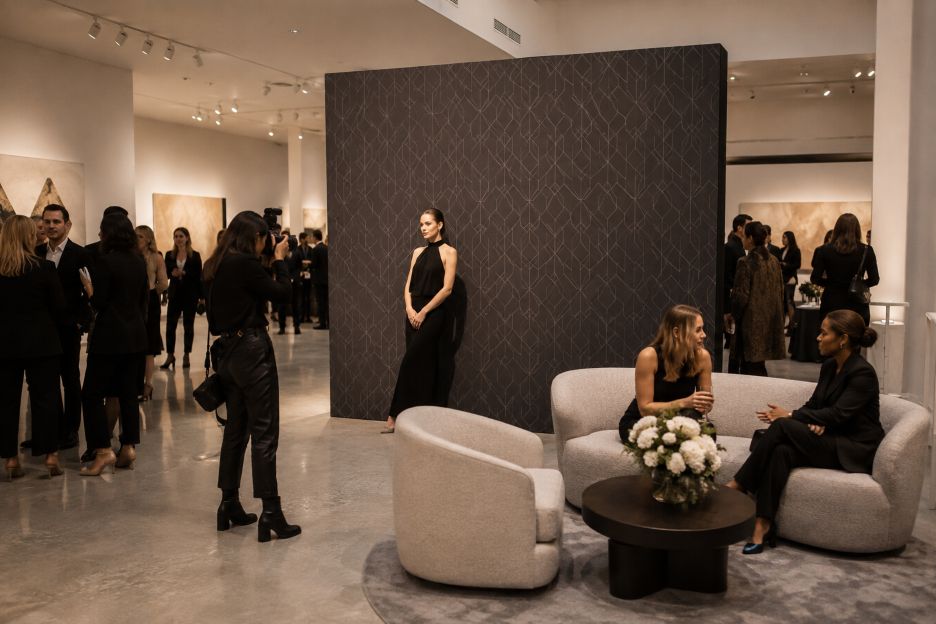
Elegant geometric fashion photo lounge

Fashion events are designed to be photographed, yet a branded backdrop can disrupt its surroundings. Oversized marks, hard reflections, or clashing colors may pull attention away from clothing, guests, and architecture. The problem is often a failure to plan the photo area as part of the interior.

The solution begins before production. When organizers consider step and repeat printing NYC during event planning, they can coordinate the backdrop with the venue, lighting, camera position, and guest flow. That coordination connects brand visibility with a composed fashion setting.

Step 1: Study the Interior Before Designing the Backdrop

Begin with photographs, measurements, finish samples, and a lighting plan. Note the floor color, wall texture, ceiling height, furniture, and entrance sightlines. A restrained design file may still produce an imposing wall in a narrow room.

Measure the space for people, photographers, lights, and queues. Choose a position that avoids doors, circulation routes, and important architecture. The area should feel planned, rather than placed in the nearest empty corner.

Step 2: Choose a Finish That Behaves Well Under Light

Material finish affects both the room and the photograph. Glossy surfaces can produce bright reflections when flash or directional fixtures strike them, while matte materials generally create a quieter visual field. The linked guide from Edible Manhattan similarly advises checking how backdrop material performs under event flash, rather than judging it only in ambient light.

Photograph physical samples under the planned lighting. Fabric can add softness, but it needs even tension. Rigid panels create crisp edges, although seams and glare need attention. Consider appearance, installation, reuse, and photographic behavior.

Step 3: Build a Controlled Color Palette

Use the event palette as the starting point. The backdrop need not match every chair, flower, or runway element. Choose one dominant neutral or low-intensity color, then add brand colors in measured amounts.

Color should also be proofed under controlled conditions. Adobe explains that surrounding light level and color temperature influence how printed color is perceived. Request a printed proof, view it under lighting close to the event conditions, and compare it with fabric, paint, and décor samples before approving production.

Step 4: Plan Lighting for Faces, Fashion, and Finish

A good photo area lights people evenly while keeping the background legible. Mixed color temperatures can complicate accurate skin tones and garment colors. Canon Europe notes that daylight, tungsten, fluorescent light, and flash have different characteristics requiring suitable white-balance decisions.

Use soft, angled light, then test with likely cameras and phones. A broader look at how lighting shapes fashion and interiors can help planners consider its effect on clothing, décor, color, and atmosphere. Check for shadows, glare, uneven illumination, and color shifts. Decorative lighting may support the mood, but it should not cast strong colors across faces or garments.

Step 5: Set Pattern Spacing and Scale at Camera Distance

Repeating marks need space to remain recognizable without competing with the subject. Test a full-size section behind one person, a pair, and a group. Review full-length and waist-up compositions.

Contrast matters as much as spacing. Guidance from the World Wide Web Consortium concerns digital readability, but its central principle is useful here: light-dark contrast supports recognition more reliably than hue alone. Use that idea as a design check, then confirm the actual result through printed camera tests.

Step 6: Use Décor to Integrate, Not Conceal

Décor should frame the branded wall and connect it to the venue. A restrained rug, low floral arrangement, bench, or sculptural lights can echo materials used elsewhere. Keep tall objects away from the standing area, where they may cover the pattern or create awkward shapes.

Leave breathing room around the backdrop. Fashion interiors often depend on proportion, negative space, and carefully edited details. Extending every decorative element into the photo zone can make images look busy. One or two repeated interior cues are usually enough to establish continuity.

Step 7: Run a Full Visual Rehearsal

Complete a mock-up before guests arrive. Place people of different heights in the marked standing zone and photograph them from the expected camera position. Review wide shots, portraits, and phone crops. A rehearsal allows the team to adjust lights, floor marks, décor, and camera distance while changes are still manageable.

Final Cohesion Checklist

  • Confirm dimensions, circulation space, camera distance, and clear sightlines.
  • Test the selected finish with ambient light and flash.
  • Compare a printed color proof with venue and décor samples.
  • Check logo scale and spacing behind individuals and groups.
  • Use soft, consistent light that respects skin tones and garment colors.
  • Keep props low, restrained, and related to the wider interior.
  • Review full-length, portrait, and phone-format test photographs.

A cohesive photo area does not need to hide its purpose. It should communicate the event identity while preserving the hierarchy of the room. When material, palette, light, pattern, scale, and décor are planned together, branding becomes one considered layer of the fashion interior rather than its dominant subject.

What Makes a Backdrop Actually Work in Event Photos

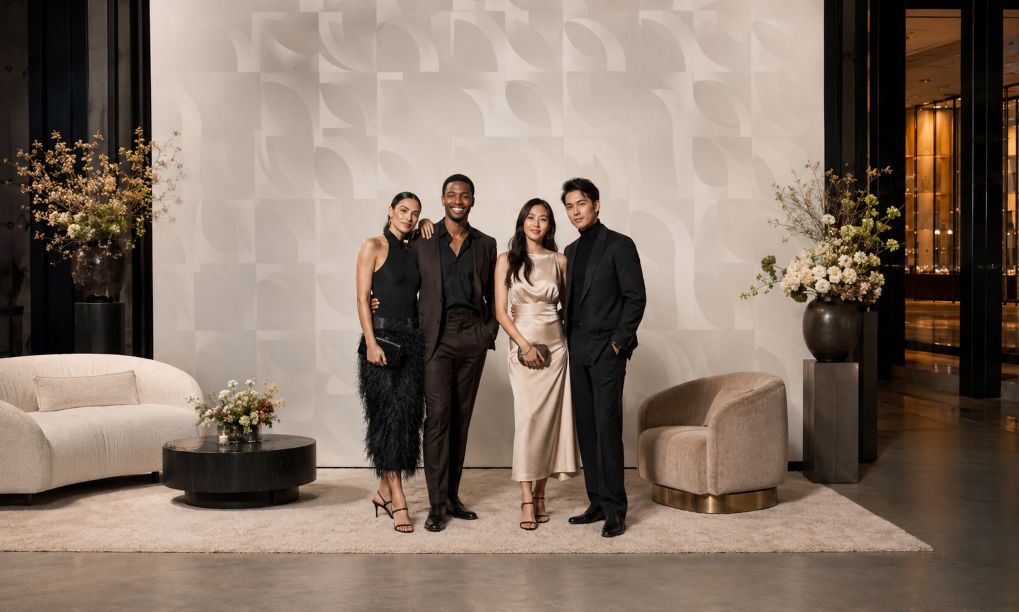
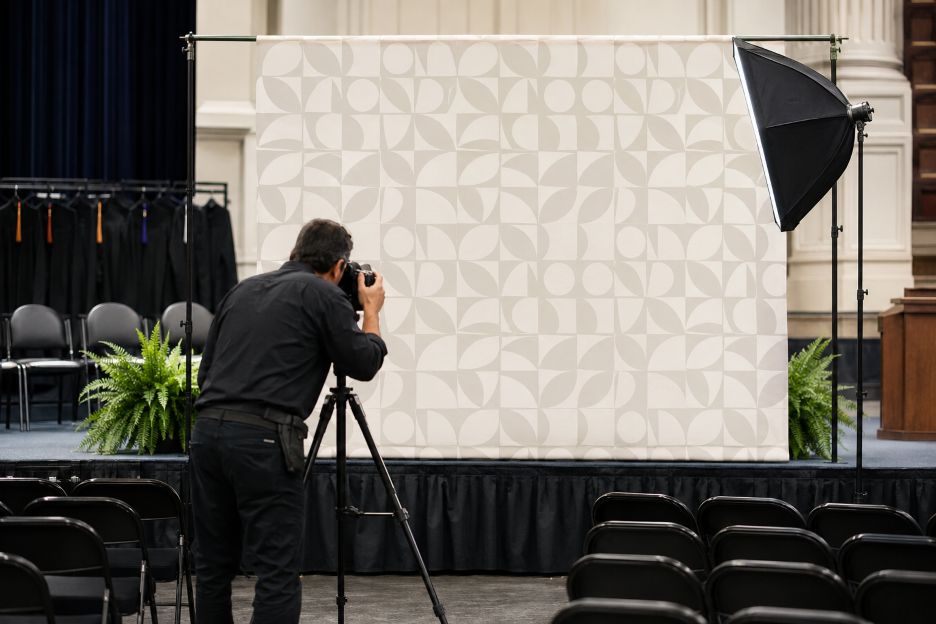
Photographer Tests Geometric Commencement Backdrop

Backdrop design has a measurable effect on whether event photographs appear clear, balanced, and useful across different media. From campus commencements to public gatherings, the background influences exposure, subject separation, logo visibility, and the amount of cropping an image can tolerate. Guidance from Adobe stresses that effective visual identities must remain recognizable at different sizes and placements, a principle that applies directly to event photo walls.

Organizers considering a step and repeat NYC setup should therefore evaluate the design through a camera lens rather than treating it as room decoration. A pattern that looks polished in a digital proof may behave differently behind several people, under mixed lighting, or inside a tightly cropped social media post.

1. Logo Spacing Determines What the Camera Captures

Repeated marks should be spaced closely enough that several remain visible around a person’s head and shoulders. When the gaps are too wide, a portrait may show only fragments. Overly tight repetition creates the opposite problem, making the background look crowded.

Adobe recommends giving identity marks clear space so surrounding elements do not weaken their visibility. For a photo backdrop, that space must be balanced against the expected framing. Testing the artwork with a simulated head-and-shoulders crop helps organizers judge whether each photograph will contain complete, readable marks.

2. Scale Must Match the Planned Photographs

Logo size should reflect how photographers will frame guests. Large marks may work in full-body group photographs but disappear partially behind subjects in close portraits. Very small marks can look sharp on the printed surface yet become difficult to identify after an image is reduced.

Guidance from Adobe identifies versatility across sizes and layouts as a feature of successful logo design. Event teams can apply that idea by producing sample crops for individual portraits, couples, and groups. The goal is a pattern that remains recognizable without competing with faces.

3. Contrast Matters Under Real Event Lighting

Contrast affects how easily cameras distinguish artwork from its background. The World Wide Web Consortium uses a contrast ratio of at least 4.5:1 for normal text and 3:1 for large text in its accessibility guidance. Those figures were developed for digital content, but they provide a useful reference when assessing whether words and graphic elements are visually distinct.

Lighting can change that distinction. Warm ballroom lights may shift white fabric toward yellow, while colored stage lights can alter brand colors. A flash can brighten reflective areas and reduce detail. Photographing a printed sample under the venue’s actual lighting is more reliable than judging colors solely on a computer monitor.

4. Matte Surfaces Usually Photograph More Consistently

Surface finish influences reflections. Canon explains in its photography guidance that direct light can produce glare on reflective subjects, while changing the light’s angle or diffusing it can reduce harsh reflections. A glossy background may therefore develop bright spots when hit by flash, video lights, or nearby spotlights.

Matte materials generally scatter light more evenly, although material choice also depends on durability, transport, and installation needs. A test photograph should be taken from several positions because glare that is invisible from the center may appear when the camera moves toward either side.

5. Color Choices Should Support the People in Front

The strongest background color is not always the most dramatic one. Light clothing can blend into a pale wall, while dark suits may lose definition against deep colors. Highly saturated patterns can also draw attention away from faces.

Adobe notes that colors form part of a broader visual identity and should suit the intended audience. For commencements, conferences, award ceremonies, and community events, organizers can review likely clothing colors before approving the artwork. Neutral fields with controlled contrast often accommodate a wider range of guests.

6. Social Media Cropping Changes What Survives

Event images rarely remain in their original dimensions. They may be converted into square posts, vertical stories, website thumbnails, or livestream graphics. Adobe advises designers to consider whether a logo remains versatile at different sizes, layouts, and placements. This matters when the outer edges of a photograph are removed.

Important marks should appear throughout the central area rather than depending on a border or corner. Fine lettering, thin lines, and detailed seals may also lose clarity when a photograph is compressed. Reviewing the design at thumbnail size reveals problems that are easy to miss on a full-resolution screen.

7. Physical Setup Is Part of the Design

Even carefully prepared artwork will photograph poorly if the structure sags, wrinkles, or leans. The Professional Photographers of America emphasizes controlling backgrounds and removing distractions when composing portraits. Visible frame edges, floor gaps, cables, and creases all become competing elements within the image.

The backdrop should be wide enough for the expected group size and tall enough to remain behind taller guests. Organizers planning several events may also consider reusable backdrop materials that can be transported, maintained, and installed repeatedly without compromising photo quality. Floor markings can guide people toward the most useful position, while a short camera test can confirm that stands and surrounding equipment stay outside the frame.

A Practical Standard for Any Organizer

These considerations apply well beyond universities. Festival planners, nonprofit groups, conference teams, cultural organizations, and public agencies face the same basic photographic questions. Clear spacing, suitable scale, controlled contrast, low glare, and crop-resistant artwork help create images that remain usable after the event.

A successful repeating photo wall does not need to dominate the setting. It needs to perform consistently for photographers, guests, and viewers on smaller screens. Early testing with realistic lighting and framing gives organizers the clearest indication of whether the final installation will work.

Minimalist Living: Coordinating Contemporary Fashion Aesthetics with Modern Home Design

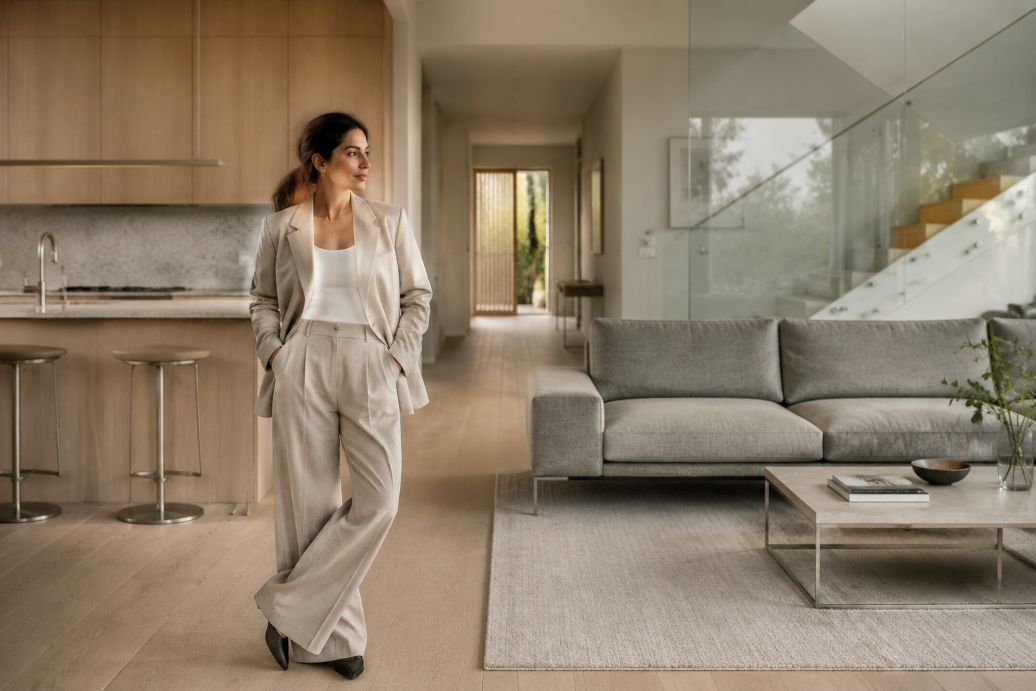
Stylish homeowner in a serene open-plan interior

Minimalism became a major artistic movement in the United States during the 1960s, using simplified geometric forms and industrial materials. The Museum of Modern Art explains that minimalist artists questioned traditional craftsmanship and treated space, structure, and materials as essential parts of the work. These principles later influenced fashion, architecture, furniture, and everyday styling.

For people creating a contemporary home, the challenge is making personal style and interior design feel connected without turning every room into a literal copy of a wardrobe. One useful approach is to see the full range of contemporary architectural features, observing how transparent panels, restrained frames, and simple structural lines can provide cohesive inspiration.

The Problem: Minimalism Can Feel Disconnected

Minimalist clothing and minimalist interiors share a visual language, yet they serve different purposes. Clothing must support movement, comfort, climate, and personal expression. A home must accommodate storage, lighting, circulation, safety, and the needs of everyone using it. Applying the same rules without considering these differences can make an interior feel staged or a wardrobe unnecessarily restrictive.

Fashion minimalism usually relies on clean silhouettes, limited decoration, practical construction, and pieces that combine easily. The Victoria and Albert Museum identifies comfort, simplicity, and wearability as guiding ideas within Gabrielle Chanel’s work. These qualities remain relevant because they place function alongside appearance rather than treating simplicity as a purely visual choice.

Interior minimalism uses comparable ideas on a larger scale. Straight lines, open surfaces, controlled colour, and carefully selected objects help establish order. However, removing too much can produce rooms that lack warmth or fail to support daily routines. The objective is therefore considered selection, not emptiness.

Comparing the Two Aesthetics

A minimalist wardrobe often begins with a dependable base: tailored trousers, plain shirts, structured outerwear, and uncomplicated footwear. Colour may be restrained, but it does not have to be limited to white, black, or beige. Deep green, navy, terracotta, and muted blue can work when they are repeated thoughtfully.

The same principle applies at home. Walls and large furnishings establish the base, while artwork, textiles, plants, and smaller objects supply character. A person who prefers charcoal tailoring and silver accessories might consider grey upholstery, pale walls, and brushed metal details. Someone drawn to natural linen and brown leather may feel more comfortable with timber, woven fabrics, and warm stone.

Material honesty provides another connection. Minimalist fashion often allows the cut and texture of cloth to carry the design. Minimalist interiors similarly give visual importance to wood grain, glass, concrete, stone, and metal. The Museum of Modern Art notes that minimalist artists embraced materials such as aluminium, fibreglass, and commercial paint, demonstrating how ordinary substances can become expressive when form and placement are carefully controlled.

The Solution: Build a Shared Design Vocabulary

A practical solution is to identify three recurring qualities in a preferred wardrobe. These might be soft texture, precise structure, and muted colour. Exploring personal touches inspired by fashion can also show how individual style translates naturally into a living space. Soft texture could appear in curtains or rugs, structure in shelving and architectural lines, and muted colour across walls and upholstery.

Proportion also matters. Loose, layered clothing tends to communicate ease, while sharply tailored clothing suggests definition. Similar effects can be created through furniture. Rounded sofas and flowing curtains feel relaxed, while slim tables, angular seating, and linear lighting appear more precise. Mixing both approaches often creates a more comfortable result than following either one exclusively.

Transparency can introduce structure without adding visual weight. Glass partitions, open shelving, and glazed barriers define areas while allowing light and sightlines to continue. They work especially well when paired with repeated finishes, such as black metal, pale oak, or satin stainless steel. Consistency across a few details gives separate spaces a recognizable relationship.

Make Function Part of the Style

Useful design should guide decisions about materials as well as appearance. Reports from the United States Environmental Protection Agency explain that paints, finishes, adhesives, and furnishings can release volatile organic compounds indoors. Checking product information, selecting suitable low-emission options, and providing ventilation are sensible considerations when updating a room.

Storage deserves equal attention because visual calm is difficult to maintain when possessions have no designated place. Closed cabinets can contain irregular items, while open shelves are better reserved for objects worth displaying. Wardrobes benefit from the same logic: accessible storage for frequently worn pieces and separate space for seasonal or occasional clothing.

The Bridge to a Cohesive Home

Begin with one room and one frequently worn outfit. Compare their colours, materials, shapes, and overall mood. Select two or three connections worth developing, then test them through reversible changes such as cushions, lamps, artwork, or hardware. This measured process reduces the risk of creating an overly coordinated scheme.

Architectural elements can then provide the lasting framework. Flooring, doors, stair details, partitions, and barriers influence how a home feels across multiple rooms. When their lines and finishes relate to the owner’s broader aesthetic, furniture and accessories become easier to choose. The result feels intentional without depending on passing fashion trends.

A Personal Form of Minimalism

Minimalist living works best when it reflects real habits rather than a fixed catalogue image. Fashion and interior design can support one another through shared colour, proportion, texture, and function, but they do not need to match perfectly. Looking ahead, homes that balance restraint with comfort are likely to remain adaptable as wardrobes, families, and routines change. Cohesion comes from thoughtful repetition, while individuality comes from knowing where to depart from it.

How Lighting Design Influences the Way We Experience Fashion and Living Spaces

Research shows that lighting can significantly influence how people perceive color, texture, space, and even mood. Whether someone is browsing a clothing store, evaluating a luxury handbag, or relaxing in a living room, lighting shapes the entire visual experience. As buildings adopt more advanced electrical systems to support modern lighting technologies, infrastructure upgrades performed by a panel upgrade electrician Chester County can become an important part of maintaining performance, efficiency, and safety.

Lighting design meeting in bright space

The Relationship Between Lighting and Visual Perception

Human vision depends heavily on light. Colors, shadows, depth, and contrast all change depending on the quality and intensity of illumination. What appears vibrant under one lighting condition may look dull or distorted under another.

Research conducted by National Institute of Standards and Technology (NIST) highlights the importance of color rendering in lighting systems. Color rendering refers to how accurately a light source reveals the true colors of objects compared to natural daylight. High-quality lighting helps consumers see products more accurately and allows interior spaces to feel more natural and comfortable.

Experts note that brightness alone does not determine visual quality. Factors such as color temperature, beam distribution, glare control, and contrast also influence how people experience a space. Warm lighting often creates a sense of comfort and relaxation, while cooler lighting can enhance alertness and concentration.

This relationship between light and perception explains why designers spend considerable time selecting lighting systems that support the intended function of a room or commercial environment.

The Impact on Retail, Fashion, and Home Interiors

Fashion retailers rely heavily on lighting design because customers make visual judgments within seconds. The appearance of fabric, stitching, color accuracy, and texture can all change under different lighting conditions.

Data published by Energy Star indicates that modern LED lighting offers improved color consistency and greater control compared with many traditional lighting technologies. This flexibility allows retailers to highlight merchandise while creating an inviting atmosphere that encourages customers to spend more time browsing.

Luxury fashion stores often use layered lighting strategies. Ambient lighting establishes overall brightness, accent lighting draws attention to featured products, and decorative fixtures contribute to brand identity. Together, these elements help shape customer perceptions and influence purchasing decisions.

Home interiors benefit from many of the same principles. Lighting can make a small room feel larger, emphasize architectural features, and create different moods throughout the day. A kitchen may require bright task lighting for food preparation, while a bedroom typically benefits from softer illumination designed for relaxation. Designers often combine lighting strategies with personal touches of fashion style to create spaces that reflect individual preferences while maintaining comfort and visual balance.

Interior designers frequently use multiple light sources rather than relying on a single overhead fixture. Wall sconces, recessed lighting, pendant lights, and floor lamps help distribute illumination more evenly while adding visual interest.

Research from the American Lighting Association suggests that layered lighting contributes to both functionality and comfort. By combining different types of fixtures, homeowners can adapt spaces for work, entertainment, dining, and relaxation without major structural changes.

Energy and Performance Considerations

As lighting systems become more sophisticated, energy efficiency has become an equally important consideration. Buildings today must balance visual performance with operating costs and environmental goals.

Data from the U.S. Department of Energy shows that LED technology uses significantly less energy than traditional incandescent lighting while providing longer operating life. This combination reduces maintenance requirements and lowers electricity consumption over time.

Smart lighting controls further improve efficiency. Occupancy sensors, daylight harvesting systems, dimmers, and programmable schedules help ensure that lights operate only when needed. These technologies allow commercial facilities and homeowners to reduce waste without sacrificing comfort or visual quality.

However, modern lighting systems can place additional demands on electrical infrastructure. Buildings constructed decades ago may not have been designed to support extensive LED networks, automated controls, charging stations, or other electrical loads that now coexist within the same property.

Electrical capacity, circuit distribution, and load management all play important roles in maintaining reliable system performance. When these factors are overlooked, lighting upgrades may not achieve their intended benefits.

Infrastructure Improvements That Support Modern Lighting

One challenge facing property owners is the growing complexity of building electrical systems. Lighting design is no longer limited to choosing fixtures and bulbs. It often involves integrated controls, wireless communication systems, automation platforms, and energy management technologies.

As these systems expand, electrical infrastructure may require modernization to accommodate increased demand and improve overall reliability.

Industry professionals often evaluate electrical panels, service capacity, wiring conditions, and circuit configurations before implementing large-scale lighting projects. These assessments help identify potential limitations that could affect performance or safety.

Research published by the National Fire Protection Association (NFPA) emphasizes the importance of maintaining electrical systems that meet current safety standards. Aging equipment can struggle to support modern loads, potentially creating operational inefficiencies or safety concerns.

Panel upgrades, service improvements, and circuit reconfiguration can help prepare buildings for advanced lighting technologies. These improvements create a stronger foundation for smart controls, energy monitoring systems, and future expansions.

For commercial environments, reliable infrastructure supports consistent lighting quality across retail floors, offices, and customer-facing spaces. For homeowners, upgraded electrical systems can simplify future renovations and support evolving technology needs.

Future Trends in Lighting Design

The future of lighting extends far beyond illumination. Designers, engineers, and manufacturers are increasingly focusing on human-centered lighting systems that adapt to changing activities and natural biological rhythms.

Research from the International WELL Building Institute highlights growing interest in lighting strategies that support occupant wellness. These systems may adjust brightness and color temperature throughout the day to better align with natural circadian patterns.

Connected lighting platforms are also becoming more common. Through sensors and intelligent controls, lighting systems can respond to occupancy levels, daylight availability, and user preferences in real time.

Fashion retailers continue exploring dynamic lighting environments that allow merchandise displays to change throughout the day or across seasons. These adaptable systems provide greater flexibility while helping brands create more engaging customer experiences.

Residential applications are evolving as well. Homeowners increasingly seek lighting systems that integrate with broader smart-home ecosystems, allowing control through mobile devices, voice assistants, and automation routines.

Advances in efficiency, connectivity, and design flexibility suggest that lighting will continue playing a central role in how people experience both commercial and residential spaces.

Conclusion

Lighting influences far more than visibility. It affects how colors appear, how spaces feel, and how people interact with their surroundings. From fashion retail environments to residential interiors, thoughtful lighting design helps create experiences that are visually appealing, functional, and comfortable.

The growing adoption of smart controls, efficient fixtures, and wellness-focused design strategies is reshaping the role of lighting in modern buildings. At the same time, supporting electrical infrastructure remains essential for achieving reliable performance. By combining effective illumination strategies with appropriate electrical system improvements, property owners can create environments that meet today’s expectations while remaining adaptable for future innovations.

Modern Fashion and Interior Trends: The Influence of Design Style of Boutique Hotels 

The design styles of boutique hotels have emerged as influential factors. It is not only for decorating their homes but also in terms of their fashion sense as well. Many people are now looking forward to creating a space that features luxury and elegance. It is alongside being comfortable and sophisticated in order to live life to the fullest.

Creating Elegant Interiors Through Minimalism

A chic boutique hotel-inspired bedroom with elegant neutral decor and linen bedding

Creating relaxing and elegant interior designs with the help of minimalistic designs has also become very common among homeowners. The best thing about such interior designs is that they not only make your house more luxurious but functional as well.

Why People Start Designing Homes after Experiencing Hotel Comforts

People desire to have at home some of the feelings they had in hotels during their vacation periods. The blend of luxury, comfort, and relaxation is very desirable in today’s life. People now tend to focus on fashion and experiences as well. This is in line with the trends that associate fashion and interior designs into traveling.

Conclusion

Boutique hotel aesthetics are what influences fashion trends nowadays. It also covers interior designs and other lifestyle aspects. The trend focuses on comfort combined with luxury and makes it easy to adapt into fashion and interiors. Many people who have traveled to such places as these want to recreate their experience at home.

How Retro Fashion and Modern Interior Designs Form a Single Lifestyle Style

The concept of vintage fashion is no longer confined to fads related only to clothing or antiques. There emerged a whole new style of living adopted by many elegant homeowners, who combine elements of vintage fashion with modern home interior designs.

Textures From Vintage Fashion: An Interior Design Influence

The revival of fabric types such as corduroy jackets and linen dresses inspires modern decor. This kind of furniture includes the use of furniture that has bouclé upholstery and velvet pillows in order to add some touch of luxury and comfort. Such decoration style seems very similar to that in vintage clothes.

A stylish woman in vintage-inspired fashion standing inside a cozy retro-modern living room

Reasons for Which Nostalgia is So Emotionally Appealing

Such design evokes many memories of happy childhood memories and family traditions that seem much easier than our current hectic life. That’s the reason why the retro design style becomes increasingly popular in our complicated digital world. Nostalgic styling allows creating comfortable atmospheres in home interiors and clothes.

Balanced Vintage Aesthetic that Is Never Too Much

Vintage style designs need a blend of old and new features. This is why homeowners use antique furniture and blend them with modern lighting. The same applies to fashion styling where vintage clothing needs to be styled using modern styles.

Conclusion

It cannot be ignored that the effect of vintage clothing styles on interior decoration still holds a significant sway in lifestyle trends. People become more and more interested in developing their style in clothes and home design.

Home Interiors with Personal Touches of Fashion Style

Fashion may define the aesthetic of a home, starting with minimalist trends and continuing the way of expressiveness. This emerging trend enables people to develop spaces that are very personal and in an expressive way.

Making Wardrobe Aesthetics by Interior Themes

Home design decisions are frequently initiated through personal style. A person, who is fond of monochrome clothes, sleek and smooth in their texture, will be inclined to minimalist interiors. In the meantime, people, who adore bright patterns in fashion, can use bright fabrics and outline decorations.

Color Preferences that Surge in the Closet to the Living Room

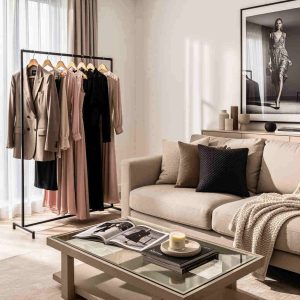
Stylish modern apartment interior featuring fashion-inspired decor, clothing rack with elegant outfits, neutral sofa with textured pillows, fashion magazines on table, soft lighting, in contemporary lifestyle.

Another close relationship between interior design and fashion is color coordination. Individuals who prefer earthy colors in their attire tend to cover their houses with the same color tones. The continuity provides an atmosphere of unity and senses of individual taste.

Ornamental Designs based on Fashion Accessories

Handbags, jewelry and scarves among other accessories are the decorative accents that are usually inspired in the homes. Metallic supports, patterned fabrics, and pieces of statements read well into interior design. These minor details make it a lot more personal, yet do not overshadow the design.

Conclusion

Interiors inspired by fashion give individuals the opportunity to carry their own fashion outside of their clothes. With the lifestyle design continuously changing, the connection between the fashion and the interiors will only strengthen.

Why an Arborist Store Is Essential for Safe and Professional Tree Climbing

There have been numerous variations of outdoor adventure over the years including hiking and camping, rock climbing and mountain biking. Another trend in the last few years that has attracted attention of both nature lovers and professionals is tree climbing. What was once almost solely a profession in the field of arboriculture, has now grown into a technical sport and professional outdoor ability. With the increase in the popularity of this activity, climbers depend among themselves on special equipment. They can only come across these tools in a special arborist store.

Those shops offer such equipment that is specifically useful in tree work, such as those that ensure performance as well as safety in tree climbing. In contrast to ordinary outdoor retailers, suppliers specializing in arborists are aware of the special requirements for tree activities. It includes moving around the canopies of trees, the manipulation of ropes and balance at considerable altitude.

The Use of Specialized Gear during Tree Climbing

Climbing trees is a complicated exercise and a sense of nature. Climbers have to walk on uneven branches, adapt to changing weight loads, and hold themselves when hanging in the air above the ground. This is the reason why arborist equipment is designed with special care to facilitate security as well as agility.

Professional tree climber wearing a safety harness and helmet using ropes and carabiners while climbing a tall forest tree canopy, sunlight filtering through leaves.

The following are some of the most important tools that a professional arborist store would possess:

Climbing Harnesses

The basis of any tree climbing system is a good harness. These harnesses will be used to ensure that they are comfortable over a long period of time. It is also responsible for sustaining the weight of the body during a long climb.

Climbing Ropes and Lines

The special ropes are also provided with strength and flexibility. They help climbers to move up effectively and down safely with the complete control of movement.

Mechanical Ascenders and Descenders

These equipment assist climbers to pass through the ropes with ease. Ascenders are used to move upward and the descenders are used to move down.

These additional tools can form an entire climbing system to enable arborists and recreational climbers to navigate safely in the tree canopies.

Tree Climbing: an Outdoor Recreational Skill-based Sport

Whereas arboriculture has always been linked to the maintenance and care of trees, the climbing element has been gaining the attention of athletes and outdoor sportsmen. There are tree climbing competitions around the world, which shows the technical competency and physical capabilities needed in the activity.

The participants will have to acquire an extensive spectrum of skills, including:

  • Upper body strength
  • Core stability
  • Rope technique
  • Strategic route planning

Similar to rock climbing, tree climbing also rewards the climbers who are able to think promptly, and adapt to their surroundings. All the trees are of a different structure, i.e. there are no two identical climbs. Due to these difficulties, tree climbing is regarded by numerous outdoor lovers as a sort of an unusual mix of a sports. It is an exploration of nature and a technical art.

Trade Offs between Safety and Performance

The most significant aspect in any climbing activity is safety. Professional store equipment of an arborist is strictly designed with safety measures. Quality equipment is subjected to intensive testing to make sure that it can bear a strong load and unexpected circumstances. Durability of equipment has the advantage of enabling the climbers to concentrate on movement and strategy and not on the stability of the system.

It is also important to train properly. The most effective equipment needs knowledge and preparation to be used. Most climbers also take time to understand the rope systems, safety measures and tree structures prior to trying advanced climbs. It is this combination of good equipment and correct technique, which enables the climbers to explore trees in a responsible manner.

Nature and Decorative Design

Remarkably, the arborist equipment displays values that are frequently observed in fashion and design: utility, quality, and considered design. There are lots of climbing equipment items that demonstrate smooth engineering and functional design. These tools can be seen as examples of how form and function can collaborate to create something beautiful. Whether it is some lightweight aluminum connectors or ergonomically shaped harness systems, these tools are such wonders. Similarly to how well designed clothing is the balance between comfort and style, arborist equipment is the balance between safety and performance.

Learning More Outdoor Inspiration

Tree climbing is one of the numerous ways that human beings are reconnecting with nature by means of skills. Education on outdoor activities may generate new interests and stimulate the value of natural settings.

YOU MAY also read: “Eco-Friendly Living with Style”. These observations tend to emphasize the fact that practical experiences in nature are helpful in achieving physical and personal development.

Conclusion

The art of climbing trees is a very exciting one that unites sportive ability, technical expertise and appreciation of the environment. Be it under the supervision of a professional arborist or an adventure lover, the practice needs a tool kit and careful planning. A professional arborist shop is critical in availing the equipment required to ensure safe and efficient climbing.

Lifestyle Minimalism: The Gap Between Nordic Fashion and Home Design

The appearance of minimalism is characterized by neutral coloring, straight lines and natural materials in clothing and the home decor. With the increasing number of people that desire peaceful and well-structured surroundings, the association between minimalist interior design and fashion continues to flourish.

Scandinavian Slim in Everyday Style

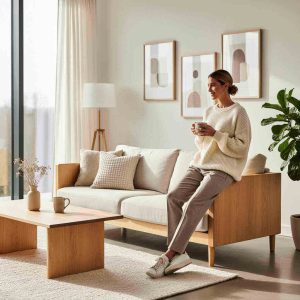
Scandinavian-inspired living room with neutral tones, wooden furniture, soft natural lighting, minimalist decor paired with a stylish woman wearing simple Nordic fashion in neutral colors, cozy modern lifestyle scene.

Nordic fashion is characterized by easy-going classiness and usability. The items of clothing are usually in neutral shades such as beige, gray, black, and white and have an easy matching color with nearly everything. This will make individuals invest less in more quality clothes that can be used throughout the seasons as they are fashionable.

Interiors Showing Composure and Symmetry

Furniture tends to rely on plain silhouettes of wood, linen or natural fabrics that are more functional.

Colorless Palettes of Wardrobe and Decor

One of the factors that make fashion and interior design so natural in minimalism lifestyles is a coherent color scheme. The neutral colors of clothes tend to be extended to home decor, which makes the visual harmony. This common coloring enables people to describe their beauty in the things they put on as well as the place they stay.

Practical Design: Functional and Comfort-friendly

Nordic design appreciates comfort and the usefulness as much as beauty. Wearable clothing is made to be worn during extended winter periods and the interiors are oriented towards warmth and comfort. There are textures such as wool, cotton and soft textiles that contribute towards creating a warm environment.

Conclusion

Minimalist fashion and interior design are connected to a larger philosophy of lifestyle. People design wardrobes and homes that are relaxed and deliberate by emphasizing quality, simplicity, and functionality. It is also a method that promotes conscious consumption and long-term level of style decisions.

With minimalism still shaping the trends across the world, Nordic-inspired living will be an effective source of inspiration.

The Intersection of Living Spaces and Personal Style

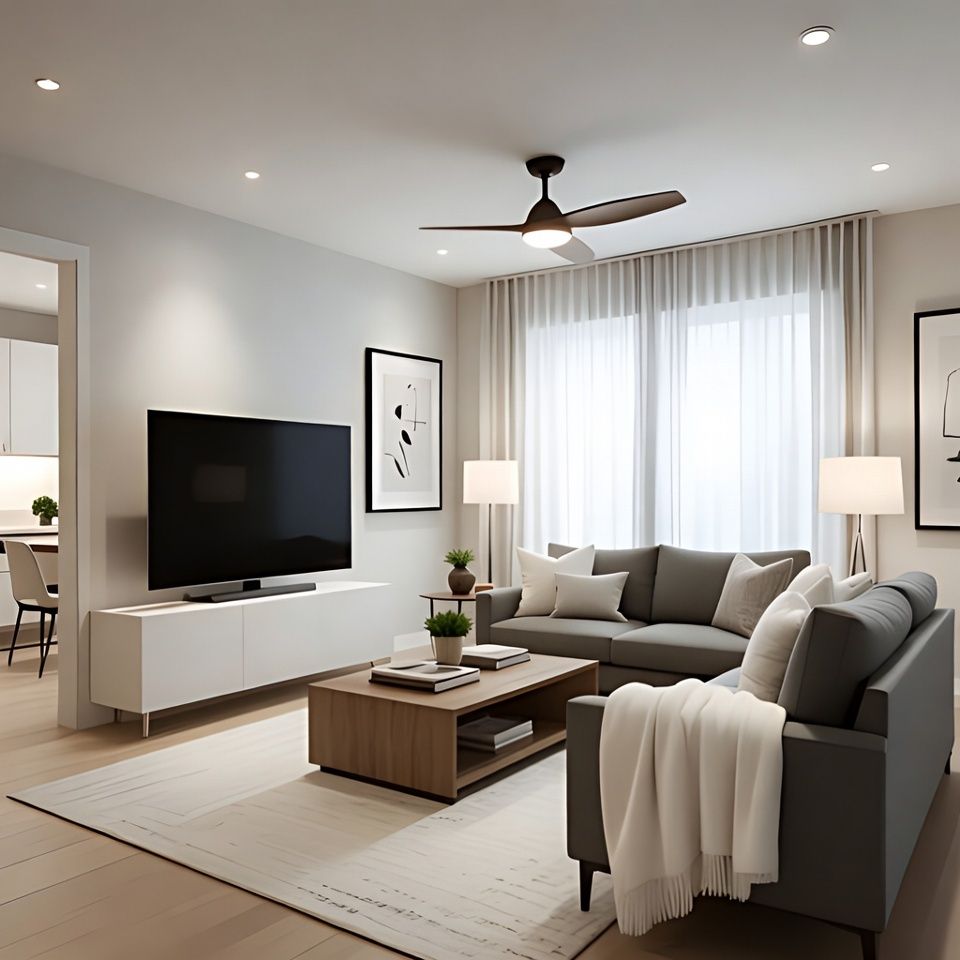
Fashion and interior design have certain common principles of creativity, expression, and functionality. Both the disciplines are self-identifying and adjust to the changing trends and practicality.

Developing Cohesion in Visual Experience

Harmonious color, texture, and shape can assist in creating personal style in fashion and interior environments. Considerable design decisions lead to comfort and aesthetic unity.
The Effect of Worldwide Innovation

Self-expression of individuals is still dependent on fashion and innovation that are widely experienced over the globe. These forces promote innovation and at the same time are timeless.

Self-Expression and Design

Combining interior design and fashion enables people to make spaces that seem to represent the personality, creativity, and tastes of the lifestyle.

How Haute Home Decor Fashion Affects Parisian Homes

Parisian interior design remains as the world’s standard for effortless flair due to the city’s famous fashion scene. The dramatic, and subtle style exhibited on the runways turning living spaces into extensions of personal style. This unique combination of high fashion and home design is creating a space where classic style meets modern style, turning it into a very sophisticated look.


Important Style Translations


Depth Through Texture and Tone

Mastering the art of layering textures is one key part of Parisian ready-to-wear fashion. Designers put different fabrics together in one area. What is known in fashion are similar to the current color schemes. Colors like deep terracotta and rich charcoal gray are providing a sophisticated look of a room that is both modern and rooted in history.


Silhouettes with Structure

Just like fashion focuses on structure and tailoring, interiors use clean architectural lines and fitted shapes. Furniture frequently has few designs and thin legs, instead, it focuses now on craftsmanship of flawless form and high-quality. This commitment to simple, organized elegance ensures the space seems open and always stylish, limiting any temporary decorating trends that make a room look old quickly.


Last Notes

Parisian interiors show that style isn’t just for clothes but a way of thinking about beauty that affects the whole house, as well as making rooms that are effortlessly elegant, and ultimately timeless works of art.

Dressed for the Screen: 7 Ways Streaming Aesthetics Influence Fashion and Interior Spaces

streaming and interior design

Streaming has changed how people see the world, and now it is shaping how we dress and design our homes. The colors, textures, and styles we see on our screens often find their way into our closets and living rooms. Inspired by the digital mirror world of movie streaming alternatives like 123movies, today’s trends in fashion and interiors draw heavily from the visual storytelling that defines modern entertainment culture.

1. Minimalist Scenes Spark a New Calm

Popular shows often use minimalist set designs to express clarity and emotion. This has inspired a wave of simplicity in both clothing and interiors. Clean lines, muted tones, and open spaces dominate today’s aesthetic. Designers use soft textures, neutral palettes, and natural light to create calm, cinematic atmospheres that echo the on-screen serenity audiences crave.

2. Color Palettes That Tell a Story

Color has become a silent storyteller in modern cinema and streaming visuals. Deep blues often represent mystery, warm golds express nostalgia, and bright reds bring intensity. These same tones are showing up in wardrobes and living rooms alike. People are embracing cinematic color palettes to build moods within their own spaces, creating emotional resonance inspired by their favorite series or films.

3. The Return of Vintage Glamour

Costume dramas have revived a love for historical fashion and décor. Lace, velvet, and ornate embroidery are finding their way back into daily style. Similarly, interior designers are drawing inspiration from grand sets filled with vintage charm. Antique pieces, floral prints, and romantic lighting are blending with modern functionality, giving homes a timeless yet contemporary appeal.

4. The Rise of the Statement Piece

Streaming culture has inspired audiences to embrace bold, camera-ready details. Whether it is a bright velvet couch or a sharply tailored coat, these statement pieces command attention. They serve as focal points, adding character and confidence to both rooms and outfits. Just like a leading actor’s wardrobe, these pieces help express personality and mood instantly.

5. Dressing Like a Character

Audiences often mimic the looks of their favorite on-screen personalities. The cozy layers from a romantic series or the sharp suits of a crime thriller become blueprints for real-world fashion. Interior trends follow a similar path. A character’s apartment style, be it bohemian, futuristic, or minimalist, often becomes a reference point for fans looking to refresh their homes. The connection between fashion, set design, and self-expression has never been stronger.

6. The Digital Mirror Effect

Streaming has created a feedback loop where audiences and creators inspire each other. Viewers absorb design cues from their screens, and producers often craft scenes that reflect current social trends. This cycle blurs the boundary between digital fantasy and real-world living. As more people discover new movie streaming alternatives, the visual language of these platforms continues to shape creative direction in both fashion and interior design.

7. Lighting and Composition Go Mainstream

Good lighting used to be a film secret, but now it is a home essential. People are designing spaces with cinematic lighting, soft LED glows, and reflective surfaces that look stunning on camera. Even daily outfits are chosen with lighting in mind, especially in a selfie-driven culture. This awareness of visual composition reflects a growing desire to live within one’s own movie scene, every day.

For more ways to transform on-screen inspiration into real-world spaces, check out this guide on turning IPTV and streaming ideas into stunning interior designs for creative insights.

Blurring the Lines Between Reality and Screen

Streaming has turned visual storytelling into lifestyle inspiration. From wardrobe choices to interior makeovers, people are living out their favorite aesthetics. The sets, costumes, and colors we once admired on screen now shape how we express ourselves at home. As more viewers explore creative spaces through movie streaming alternatives, the connection between entertainment, fashion, and design continues to deepen. Our screens do more than entertain; they mirror the evolving story of how we live, dress, and dream.

Eco-Friendly Living with Style

Having smart choices for the world without giving up style is possible. Eco-friendly fashion are all about seeing the beauty in things that last. Prioritizing the things that are beneficial for the Earth and the people living in it. To be more environmentally friendly while staying up to your style find out more in this article.


Designing A Home That Cares


Eco-Friendly Fashion Choices

Small changes is still a change that impacts greatly in your closet. Be more considerate on the clothes you wear as how they are made, break away from spending a lot of money on inexpensive ones, buy try to invest on the grey good ones that will last longer. Find materials that uses less water and chemicals to help Mother Earth. Try to find the beauty of thrift stores one online resale sites to make the use out of it.


Eco-Conscious Interiors

Using eco-friendly items shows what you value for as well as the behaviors in your house. Choose furniture from recycled materials like metal or use bamboo furnitures to help from wasting other harmful materials. Save electricity by using LED lamps and natural light also add plants for natural beauty and cleaner air in your home.


Overall Ideas

Living an eco-friendly life through the way you style your clothes and home decor. Having your style while making the Earth beautiful is posy by simply carefully using materials both on your home and clothes. It’s about choosing choices that are good for you and the world.

The Hidden Elegance of Clean Spaces: Why Deep Cleaning Furniture Mirrors the Capsule Wardrobe Philosophy

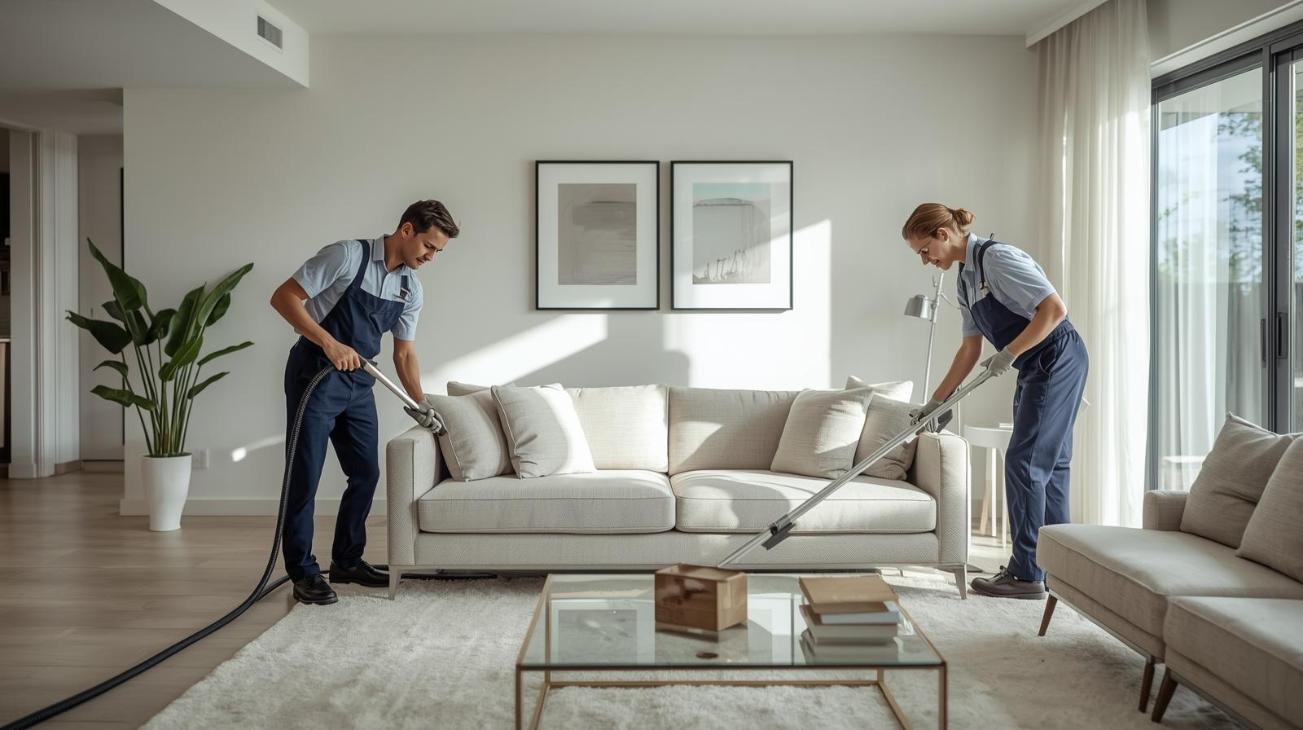
Two Sunshine Coast cleaners smile while deep cleaning a designer sofa in sunlight.

Just as a fashion connoisseur puts together a capsule collection aimed at achieving a timeless aesthetic, so too are owners and designers finding out that deep cleaning furniture is the starting point for creating a chic interior.

As with any edited closet, the pieces in a home should be cared for to showcase refinement and attention on every surface. The connection between fashion and home care reveals that appreciation is not merely in design but also in the care of the item.

The Shared Language of Minimalism and Maintenance

Both capsule wardrobes and pristine, unembellished interiors subscribe to the “less but better” philosophy. They eschew clutter in favor of thoughtful curation. Deep cleaning is frequently the unsung hero of design, removing the invisible dust and grime that dulls the natural texture of fabrics and surfaces.

It is a delightful feeling to rediscover a favorite tailored blazer, just as it is a treat to the soul and interior to know a linen chair has been refreshed or a velvet couch has returned to its glory.

The Fashion of Freshness

The positive energy associated with newness is hard to miss. With fashion, it comes with the sensation of wearing clean, new, and pressed garments. In a well-decorated interior, one can relax on a new-looking couch and enjoy its freshness.

The vibrant and bold patterns and designs of the furnishings and accessories and the materials of ‘cleaning’ and ‘deep cleaning’ shift with time. ‘Transforming’ spaces with cleaning distressed furnishings and accessories evokes new patterns and designs.

It is a reminder of the positive energy associated with newness. The positive energy reminds us of the emotions cleaning new spaces evokes.

In visual storytelling, a part of the story is the unsaid emotion that accompanies the newness. The bare and clean sofa will allow the designer to dynamically shift the styled accessories to art pieces for the walls and the clothing.

It will also strip the sofa of its dullness and provide new and bold patterns for tone-on-tone layering. Systems of cutting and cleaning become devices for articulating storytelling and breathing new life into spaces. New systems for cleaning and clearing act as storytellers.


ALSO READ: 4 Unique Approaches Fashion Designers Take Using White Pages Connections


Sustainability Meets Style

The emotion that surfaces with newness is also and increasingly associated with the concept of ‘clean.’ As fashion is associated with newness and cleaning to art, it also integrates the concept of ‘capsule,’ where lead cleaning cloths lower consumption of fashion.

When patterns of cleaning couches are part of mindful consumption, it will also dictate the flow and focus of the compartmented space. Integrating care into design philosophy transforms houses from fleeting trends to enduring reflections of style and meaning.

A Conscious Beauty Lifestyle

In both cleaning furniture and coordinating a capsule wardrobe, there is a conscious effort to prioritize quality, comfort, and durability over a fleeting trend. They illustrate that the most stylish spaces, like the most refined ensembles, are those that age beautifully.

Balancing Style and Function in Your Apartment

Finding a place to live in New York could be hard because homes here are so compact. Rent is kind of expensive and apartments are small, so making every part of your home important. The good news is that when you do things the right way, your home can be beautiful, and welcome with smart design, even this is the smallest space.


How to Decorate Your Space Without Breaking the Lease


AddingTextiles and Accessories To Make It Your Own

Using fabrics can add color and pattern incorporated with lovely scarves or fashionable tapestries framed paintings in decorating your walls. Best thing for floors are the large area rugs that can cover up old floors, provide color or a soft texture, and even delineate an open space. Throw pillows and blankets, can simply change the look of your furniture like you can with jewelry.


Choosing the Right Furniture and Lighting

Choose furniture that has more than one use is a wise move. Also use the things that are easily to move like a coffee table with storage. For illumination, use floor and table lamps, even string lights and skip the hardwired fixtures. With this it set the mood, drawing attention to certain areas, and immediately change the feel of a room to better one. Think of them as the perfect accessories that show off your style without making any permanent alterations.


Final Thoughts

The keys to styling a rental unit is making informed selections, decisions, and being creative. Adding your own taste of style to every room is great without breaking your lease through employing textiles and adaptable furniture that doesn’t require to much of something. A rental can be just as stylish and welcoming as a home you own.

Seoul’s Most Fashion-Forward Bars Where Style Meets Space

Whether you’re living the Gangnam Jjim-o System (강남 쩜오 시스템) lifestyle or simply soaking in Seoul’s vibrant nightlife, few things feel as luxurious as stepping into a bar where fashion and interior design collide. For some where “what you wear can inspire how you live”, here’s a guide to Seoul bars where couture and curated ambiance create the ultimate after-hours experience.

List of Fashionably Designed Bars in Seoul, Korea

Check them out one-by-one below:

1-The Velvet Curtain – Mini Coated Classics in Mid-night Glitz

The presence of subtle velvety textures, low lighting in the room, and smooth gold fixtures pre-determines the appearance of monochrome sets and heavy lipstick. Envision simple minimalistic furniture with a glam feel. This is the ideal scenario to display your make-a-statement fashion items.

2-Concrete Bloom – Flowered Edge with an Industrial Edge

Through its play of raw materials and subtle details, Concrete Bloom incorporates bare brick, metal cladding, and flower arrangements that seem out of place. It suits well those who enjoy wearing tailors and stilettoes, in addition to structured designers, such as trousers or stiletto boots, with artistic decorative pieces that soften the wear.

3-Neon Noir – Dance of Light and Style

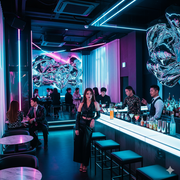
A dimly lit, modern bar in Seoul with neon lights, sleek furniture, and stylish patrons.Neon Noir offers bold fashion decisions, a visual feast of neon signs, reflected surfaces and gradient lighting. Interiors are dynamic and luminous, and so is the fashion-conscious spirit of its clientele.
4-Silken Loft – Luxe Fabrics, Understated Elegance

The opulent but cozy atmosphere of Silken Loft is provided by soft silk upholstering, warm lighting, and brass decorations. It is the place of those who prefer fancy evening things (silky dresses or custom-made blazers) combined with the interior which looks and feels equally good.

5-Retro Rhapsody – Retronic Revival in the Contemporary Setting

Retro Rhapsody is a bridge between the eras of fashion with plush velvet sofas, retro armchairs in rich jewel colors, and mid-century modern lighting. Imagine organized retro silhouettes or contemporary vintage pieces that adorn the layered and nostalgic interiors.

Why These Bars Work for Fashion and Interior Design Lovers

  • Fashion as Décor: In each space, what the patrons wear becomes part of the aesthetic. The designers and trendsetters alike become living room vignettes.
  • Atmospheric Inspiration: From neon-lit drama to soft luxury, these bars offer decor ideas you can reinterpret at home, texture layering, color drama, lighting strategies.

Final Note

Be it your next evening out in Seoul or even a simple aesthetic Mood Board of the home or wardrobe, these five bars provide you with a deep well of thoughts, where house decor and clothing design go hand in hand. wish me to prepare pictures or planings, according to any of these?

Stylish Home Office Designs for 2025: Comfort Meets Curb Appeal

Working from home is a fashion and even a way of life. Your home office must be a place that inspires creativity, effectiveness, and comfort whether your work is full-time or part-time. The best stylish home office designs in 2025 are aimed at combining functionality with an individual touch.

The Ways to Make a Workspace That Tells Your Story

Here is how you can have a working space that will work hard with you.

Choosing the Proper Spot

A working table in the center of a room inside the house where a potted plant is placed near the computer monitor. The key to a home office design is locating the place. Natural light increases energy and helps to restore the eyes. Put your office by a window. Even when the space is small, a small corner can be maximized using the magic of furniture and accessories.
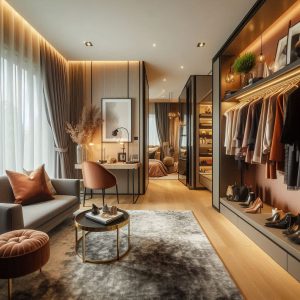
Furniture That is Both Stylish and Functional

Ergonomics are not a choice anymore, it is a necessity. Invest in a chair that keeps the back straight as well as fitting in the appearance of the room.

Mood-Enhancing Colors and Decorations

Your focus and moods are color-based. Neutral colours induce a sense of tranquillity or balance of productivity. To add some bold twist it can be energizing to the space. Hang up framed art or mood boards or even a gallery of inspirational quotes.

Fashion-Inspired Textiles

Get inspired with the world of fashion and incorporate fashionable fabric. A heavy rug in pattern will provide warmth to the feet, and pillows in popular fabrics, such as a boucle or even velvet can cushion the effect.

Putting Indoors the Power of Nature

Potted plants are not just mere decoratives, but boost the quality of air and take trouble off your nerves.

DIY And Thrifted Finds

Sophistication does not have to be costly. In 2025, and beyond, the most attractive office design will feature thrifted office pieces, painted used furniture or handmade shelves.

Final Thoughts

A trendy home office in 2025 is not only a tool to work comfortably, but a place in which you can make it seem as though the room is an extension of your personality just as it is necessary to support your productivity. Choosing smart furniture, fashion evocations, and environment-friendly touches, you will make your home office both practical and fantastic.

Finishing Touches That Add Style To Your Home

Adding designer things to your home is a simple way to make it stand out. These things are more than just pretty things. They give any space a little bit of personality, style, and luxury. When creating a classy home and reflecting ones creativity start with using the right pieces and designs. So it is just all about choosing items that has sense to you and that fit in with the rest of your room.


Elevate with Style


Picking Pieces That Matter

When starting try adding things that stick out and giving the room its strong focal point. A dramatic light fixture like a piece of art can establish the mood for the whole room. Big mirrors with nice frames create am effect of making a space bigger and brighter. These things give plain spaces personality and charm.

Adding Texture and Character

Soft, rich fabrics used to construct blankets and cushions make your space feel warm and friendly. A cashmere yarn covering or a soft leather pillow will make you feel more at home and like you’re at a fancy hotel. Rugs that are carefully made give rooms structure and make them sense soft underfoot. You can also show off your style with unique art displays or glass objects that you made yourself.


Final Notes

Designer accessories are the last touch that makes your home feel complete. Every item, from stylish trays to unique paintings, adds beauty and practicality. The most significant consideration is to pick things that you like and that match the ambiance you want in your space. With the right touches, your home could possibly be far more than just a place to live.

Rugs and Carpets Inspired by Fashion from the Runway to the Room

Fashion is continually changing and finding new methods to express itself, and rugs and carpets are becoming a canvas for it. Rugs that have been inspired by aesthetics bring the anticipation of the runway into the comfort of your house while making your floors appear great. These rugs add a touch of high luxury to your house with their bold designs and lovely textures.. It’s about putting fashion on the ground.


Trends in Patterns and Textures for Art on your Floors


Pattern Play: Designs That Are Famous

Using well-known design patterns on rugs can dramatically change the look of your floors. When you put zebra, or leopard, prints on things like drapes and pillows, it makes the room feel wild and free. They make the space look more intriguing and add a little something special.. Geometric designs like stripes, dotted lines, and abstract forms give a more structured style a modern, current look.. These patterns are based on current style and make any place look dynamic and interesting.

Luxurious Underfoot: Fabrics and Textures

Rugs don’t belong to only about their designs; they are also about how they feel. For use high-pile carpets that appear, a touch of luxury, and feel like velvet. These beautiful extras make any spare bedroom and stylish. Woven textures that seem like materials like tweed or boucle, on the other hand, give your floors a more handmade look. These tactile solutions make any room feel more rich and well-planned by adding depth and interest.


Final Thoughts

Fashionable rugs and carpets bring the originality and forms of the runway into your home, giving your flooring a fashionable look. Fashion may help you make your home stylish and unique by employing patterns, fabrics, and small accents. In terms of style, it’s regarding ensuring your place of residence look like the journey you’ve been on.

Art That Reflects Your Fashion Sense

Your walls are a blank canvas just ready for artistic expression; prints and wall art inspired by fashion provide the ideal means to bring style and individuality into your house. Drawing on runway trends and street fashions, these works transcend conventional art to produce a dynamic and modern look. It’s about turning your walls into a chic exhibit.

Stylish Homes’ Fashion Inspired Wall Art


Bringing Runway Inspired Motifs from High Fashion Home

Abstract garment sketches accentuate any environment with artistic flair and sophistication, therefore capturing the core of high fashion. Prints with recognizable textile designs, such as houndstooth or tweed, give a contemporary spin on traditional fashion elements.

Adopting Urban Chic with Sensibilities for Street Style

Graffiti-inspired art brings street culture inside with an urban edge. Whether high-fashion editorials or candid street-style images, striking fashion photography prints have a modern and dynamic visual effect.

Keeping in Trend with Colour Stories

Seasonally color pallet art prints inspired by runway trends keep your décor current and new. Focusing on texture and shape over strong colors, monochromatic works produce classic beauty.

Reflecting Your Personal Style and Fashion Sensibility

Custom fashion illustrations of preferred designs or style symbols create original, one-of- a-kind wall art. Vintage fashion magazine covers offer an insight into fashion history and sentimental appeal.


Final Observations

One great approach to highlight your style and personality is with fashion-forward wall art and prints. Combining runway ideas, urban inspirations, and trend-driven colors results in a gallery that chronicles your particular style. It’s about turning your walls into a real discussion starter and mirror of your own style development.

Where Fashion Meets Interior Design in New Home Construction

When building a new home, design choices go beyond blueprints and layouts. Today, many homeowners are blending fashion trends into their interiors. The goal is to create a space that reflects their personal style — just like how they choose their clothes. From color palettes to textures, fashion influences are helping shape stylish and modern new homes grapevine TX.

Fashion-Inspired Interiors

Home design is no longer just about furniture and function. Like clothing, your home can make a statement. Bold patterns seen on the runway are now showing up on wallpaper and accent pieces. Earthy tones and natural fabrics that dominate seasonal fashion trends also shape living rooms and bedrooms. This cross-over allows homeowners to create cohesive looks between their personal wardrobe and the rooms they live in.

For example, if you love clean, minimalist clothing, you might prefer a neutral-toned, Scandinavian-style home. On the other hand, if you enjoy bright colors and playful fashion, your home could reflect this with vibrant art, unique lighting, and textured surfaces.

Building for Style and Comfort

New home construction offers a chance to customize interiors from the ground up. Builders and interior designers now work together early in the planning process to make sure that fashion-forward choices are part of the final design. This might include adding built-in storage to display accessories, custom closets that feel like a boutique, or sleek materials that look good and last long.

Using materials like matte black fixtures, brass finishes, or velvet upholstery adds a sense of modern luxury. These choices are not only trendy but also functional, offering long-term value and appeal.

Personal Expression in Every Room

Fashion is personal — and your home should be too. When you combine elements from your favorite styles into your interior space, it becomes more than a house. It becomes a reflection of your lifestyle. Many homeowners now work with interior stylists the same way they might work with a wardrobe consultant. The result is a home that feels curated, not just decorated.

Every space, from the kitchen to the bedroom, can carry subtle nods to your fashion preferences. Soft fabrics, statement lighting, and even the layout of a room can reflect what you love. In this way, home design becomes an extension of your personal brand.

Incorporating fashion into new home construction is more than a trend — it’s a fresh way to think about design. It blends creativity with comfort and allows you to live in a space that truly represents who you are. Whether you’re building your dream home or planning a renovation, keep style and self-expression in mind.

Modern Throw Pillows and Blankets Will Transform Your Space

Throw cushions and blankets are significant design tools that can quickly change a room, not only comfort buddies. These soft goods create a warm and inviting environment by adding personality, color, and texture. From velvets to textured knits, these accents are the ideal approach to bring warmth and flair into your living areas. It’s about designing a comfort and stylish refuge.

Stylish Comfort with Throw Pillows and Blankets


Textural Pleasures: Adding Dimension and Depth


While floral designs give your home a little of natural beauty and romantic appeal, geometric patterns offer a sophisticated and contemporary touch and create a visually dynamic effect.


Material Combining: Developing Tactile Pleasure

Faux fur pillows and blankets provide a little of whimsical luxury and a soft, inviting feel; blankets and linen pillows give a laid-back, informal elegance ideal for establishing a laid-back environment.

Creating Warmth and Depth: Layering Techniques

Drape covers casually over sofas or beds to add a little of simple flair and create a pleasant vibe; layer various sizes, shapes, and textures of throw pillows to produce a pleasing and comfortable arrangement.


Conclusion

Essential elements for a pleasant and inviting home are elegant throw pillows and blankets. Your living areas will become havens of warm chic by carefully choosing textures, colors, patterns, and materials. It’s about including those ideal finishing details that transform a house into a home.

Dressing Your House Like You Would Dress Yourself

Your house should be an expression of your own style, much as you choose your clothes to capture your own sense of taste.

Aligning your Clothes with your Home Decor

1. Choose your style

Sort Your Clothes: Are you drawn to traditional designs, strong patterns, or understated pieces?

Look for common threads in your wardrobe: are materials, colors, or textures repeating?

2. Interpret your style for decor

Create your house décor with colors from your best clothing pallet. If you enjoy navy and blush, think about these colors for your throw pillows, rugs, or walls.

Bring in fabrics you like wearing, such as leather, velvet, or linen, then mimic their textures. Likewise, arrange your passion of geometric prints, florals, or stripes into your house décor using curtains, rugs, or artwork.

3. Establish a cohesive look

Balance: Steer clear of overpowering your house with too many competing aspects, much as you wouldn’t wear conflicting patterns. Travel mementos, family pictures, or artwork that speaks to you personally will help to express your hobbies and style.


Endnote

Thoughtfully tying your wardrobe selections to your home décor will help you to create a living environment that really captures your own style and personality, therefore increasing the comfort and enjoyment of the place.

Your Wardrobe, Your Walls: How to Translate Fashion Trends into Stunning Interior Design

Fashion and interior design share a symbiotic relationship, where trends in one sector often inspire the other. As we curate our wardrobes, we can likewise make our living spaces into fashionable sanctuaries.

This blog post explores how to adapt the newest fashion trends into magnificent interior design that represents your particular style.

The Basic Color Shades

If you want to design your space uniquely, you must have a basic understanding of various color shades that may affect your space.

Solid and Bright Shades

Incorporate bright hues like emerald green or brilliant coral into your home through accent walls, furniture, or decor. A statement sofa in a rich color can serve as the main point of your living area.

Soft and Muted

On the flip side, soft pastels and muted tones are equally trendy. Think rosy pinks and gentle blues for a peaceful mood. Use these colors in your bedroom or bathroom to create a calm refuge.

Various Textures and Style

Detailed below shows how to design your space through different styles:

Incorporation of Layers

Combine multiple materials to give a tactile element that welcomes comfort and style.

Statement Patterns

Fashion often contains strong patterns, from florals to geometric shapes. Bring these into your home with wallpaper, area rugs, or bold art pieces. A patterned accent wall may enliven a room.

Conclusion

Translating fashion trends into interior design helps you to display your particular style in several dimensions. By embracing color palettes, combining textures, and accessorizing wisely, you can create a house that is as trendy as your outfit. Your clothes can indeed influence your walls, resulting to a stunning and harmonious design that expresses who you are.

Modern Chic: A Fashionable Combining of Form and Purpose

Years of popularity for industrial-style home décor have seen it change with a fashion-forward edge. Raw materials, strong lines, and a little glitz will help you design a room that is both elegant and useful.

Industrial Style Basics and Fashion Touches


Fundamental Principles of Industrial Style

Emphasize the raw elegance of your room by revealing concrete ceilings, brick walls, and metal beams. If you want a metal accents, consider to decorate it with copper, iron, and steel among other metals. Therefore, think industrial lighting, metal furniture, and metallic accessories for your theme. Additionally, using a color pallet of dark grays, black, and deep blues will help you to create a dramatic mood.

A Fashion-Forward Turnabout

These fashion-inspired ideas will help your industrial-style space stand out:

  • Plush rugs, Velvet drapes, and soft throws will add a little luxury.
  • Incorporate animal prints, geometric prints, and abstract designs among other strong patterns.
  • Create a statement with unusual lighting fixtures like sculptural floor lamps or big pendant lights.
  • Accessorize your room with chic accents including sculptures, artwork, and decorative objects to bring character.

Last statement

A really distinctive and fashionable house can be created by blending the glamor of high fashion with the raw elegance of industrial design.

Zero cookies are being used on the website. Only basic information is being collected. Privacy Policy
𐌢